English
  Български
  Deutsch
  العربية
  Čeština
  Dansk
Dansk  Ελληνικά
  Español
  Eesti
Eesti  Suomi
Suomi  Русский
  Türkçe
  Français
  Magyar
  Bahasa Indonesia
  Italiano
  日本語
日本語  한국어
한국어  Lietuvių
  Latviešu
  Norsk Bokmål
  Nederlands
  Polski
  Português
  Română
  Slovenčina
  Slovenščina
  Svenska
  Ukrainian
  中文
中文  Srpski
  Hrvatski
Партнерский и реферальный маркетинг: Руководство по росту 2026


Руководство по партнерскому и реферальному маркетингу для взрывного роста 2026
В погоне за устойчивым ростом компании постоянно ищут эффективные способы привлечения новых клиентов. Хотя традиционная реклама имеет свое место, две из самых мощных и экономически эффективных стратегий в современном маркетинговом арсенале — это партнерский маркетинг и реферальный маркетинг. Хотя их часто используют как взаимозаменяемые, это разные каналы, которые используют различные отношения и мотивации для достижения общей цели: привлечения нового бизнеса.
Понимание нюансов между этими двумя мощными стратегиями имеет решающее значение для любой компании, стремящейся создать надежный механизм привлечения клиентов. Партнерский маркетинг использует охват сторонних создателей контента для привлечения новой аудитории, в то время как реферальный маркетинг активизирует вашу существующую клиентскую базу, превращая лояльных поклонников в мощных сторонников. Один из них — это распространение сообщения для многих; другой — это личные рекомендации между доверенными друзьями.
Это всеобъемлющее руководство разъяснит как партнерский, так и реферальный маркетинг. Мы подробно рассмотрим, что это такое, как они работают, и ключевые различия, которые их отличают. Что еще более важно, мы изучим реальные примеры и кейсы от некоторых из самых успешных компаний мира, чтобы проиллюстрировать эти концепции в действии. К концу вы получите четкое представление о том, какая стратегия — или их комбинация — подходит для стимулирования роста вашей компании.
Основное различие: отношения и охват
Фундаментальное различие между партнерским и реферальным маркетингом заключается в отношениях между промоутером и потенциальным клиентом. Это различие формирует каждый аспект стратегии, от участвующих сторон до предлагаемых вознаграждений.
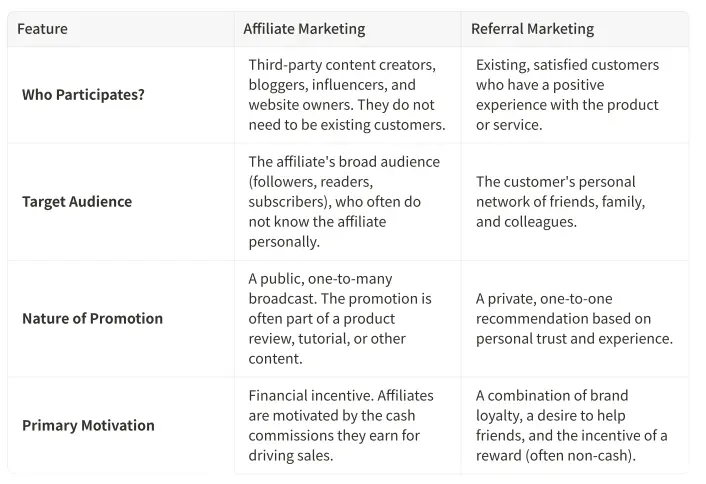
По сути, партнерский маркетинг — это канал рекламы, основанный на результативности, в то время как реферальный маркетинг — это формализованная и стимулируемая версия сарафанного радио.
Как работает партнерский маркетинг: партнерство, основанное на результатах
Партнерский маркетинг — это структурированное партнерство, при котором компания выплачивает комиссию внешней стороне (партнеру) за привлечение трафика или продаж благодаря ее маркетинговым усилиям. Это очень масштабируемый способ охватить новую аудиторию через авторитетные голоса в конкретных нишах.
Процесс:
1. Создание программы: Компания создает партнерскую программу, определяя структуру комиссионных, методы отслеживания и правила продвижения.
2. Набор: Компания набирает партнеров, или партнеры подают заявки на участие в программе. Это часто происходит через специализированные партнерские сети, такие как Commission Junction, или напрямую через веб-сайт компании.
3. Продвижение: После одобрения партнер получает уникальную отслеживаемую ссылку. Затем он создает контент (сообщения в блогах, видео, обновления в социальных сетях), который продвигает продукт компании и включает эту партнерскую ссылку.
4. Конверсия: Потенциальный клиент нажимает на ссылку партнера и переходит на веб-сайт компании. Если он совершает покупку в течение определенного периода времени (известного как «окно cookie»), продажа приписывается партнеру.
5. Комиссия: Компания выплачивает партнеру заранее определенную комиссию за успешную продажу.
Пример использования партнерского маркетинга: Amazon Associates
Партнерская программа Amazon, известная как Amazon Associates, является квинтэссенцией примера масштабного партнерского маркетинга. Она позволяет любому, от крупных изданий до отдельных блогеров, зарабатывать комиссионные, размещая ссылки на продукты Amazon.
• Почему это работает: Amazon использует свой обширный каталог продуктов и проверенный бренд, чтобы партнерам было легко находить подходящие продукты для продвижения. Структура комиссионных «вся корзина», при которой партнеры зарабатывают на всем, что покупает клиент после перехода по их ссылке, является мощным стимулом. Простота программы и универсальная привлекательность продуктов Amazon сделали ее выбором номер один для партнерских маркетологов по всему миру.
Как работает реферальный маркетинг: Активизация ваших клиентов-адвокатов
Реферальный маркетинг, также известный как сарафанное радио, побуждает существующих клиентов рекомендовать продукт или услугу своим друзьям и семье. Он построен на основе доверия и личных отношений, что делает его одним из самых эффективных каналов привлечения клиентов.
Процесс:
1.Настройка программы: Компания создает реферальную программу, обычно предлагая вознаграждение как существующему клиенту (рефереру), так и новому клиенту (рефералу). Это известно как двусторонний стимул.
2.Регистрация клиентов: Существующим клиентам предлагается присоединиться к программе, часто непосредственно в их учетной записи пользователя или через электронные рассылки.
3.Распространение: Клиенту предоставляется уникальная реферальная ссылка или код для распространения в его личной сети по электронной почте, текстовым сообщением или через социальные сети.
4.Конверсия: Друг переходит по ссылке, часто получая вступительную скидку, и совершает свою первую покупку.
5.Выплата вознаграждения: Как только покупка нового клиента подтверждена, реферер и реферал автоматически получают свои вознаграждения.
Кейс-стади в реферальном маркетинге: Dropbox
Ранний рост Dropbox — это легендарная история успеха реферального маркетинга. Вместо того чтобы тратить большие средства на традиционную рекламу, Dropbox реализовал простую, двустороннюю реферальную программу: «Дай 500 МБ, Получи 500 МБ».
•Почему это работает: Вознаграждение было напрямую связано с основной ценностью продукта — большим объемом хранилища. Это было выгодно как рефереру, так и новому пользователю, создавая мощный стимул для распространения. Программа была бесшовно интегрирована в пользовательский опыт, что делало приглашение друзей легким. Эта вирусная петля была ключевым фактором экспоненциального роста Dropbox, помогая ему привлечь миллионы пользователей с минимальным маркетинговым бюджетом.
Больше примеров успеха
Партнерский маркетинг: ActiveCampaign
В качестве примера B2B не ищите ничего, кроме ActiveCampaign, платформы автоматизации маркетинга. Их партнерская программа очень привлекательна для серьезных маркетологов, поскольку предлагает пожизненную повторяющуюся комиссию. Пока клиент, привлеченный партнером, остается платящим подписчиком, партнер продолжает получать процент от этого дохода. Эта модель стимулирует партнеров находить высококачественных, долгосрочных клиентов, идеально согласуя их цели с целями компании.
Реферальный маркетинг: Tesla
Tesla мастерски использовала реферальный маркетинг, чтобы превратить свою страстную клиентскую базу в мощную силу продаж. Их реферальная программа предлагала различные ценные вознаграждения, от денежных бонусов и бесплатных миль для зарядки Supercharging до шанса выиграть новый автомобиль. Предлагая эксклюзивные и желанные вознаграждения, Tesla использует стремление к престижу, присущее ее бренду, и заставляет своих клиентов чувствовать себя инсайдерами, что еще больше укрепляет их лояльность и адвокацию.
Выбор правильной стратегии для вашего бизнеса
Выбор между партнерским и реферальным маркетингом не всегда является вопросом «или/или»; многие успешные компании используют оба подхода. Однако правильная отправная точка зависит от стадии развития вашего бизнеса, продукта и целевой аудитории.
• Начните с реферального маркетинга, если: У вас есть база довольных, вовлеченных клиентов. Ваш продукт имеет четкое ценностное предложение, которым легко поделиться. Вы хотите сосредоточиться на высококонверсионном, недорогом привлечении клиентов и создании лояльного сообщества.
• Внедряйте партнерский маркетинг, если: Вам нужно охватить более широкую аудиторию и повысить узнаваемость бренда. Ваш продукт имеет более высокую цену, которая может поддерживать денежные комиссии. Вы находитесь в нише, где создатели контента и инфлюенсеры имеют значительное влияние.
Заключение: Две стороны одной медали роста
Партнерский и реферальный маркетинг — это два самых мощных, ориентированных на результат канала, доступных современным компаниям. Хотя они действуют по разным принципам — один использует широкий охват сторонних ресурсов, а другой задействует глубокое личное доверие — оба предлагают четкий путь к масштабируемому и экономически эффективному привлечению клиентов.
Понимая фундаментальные различия между этими двумя стратегиями и черпая вдохновение из успешных примеров таких компаний, как Amazon, Dropbox и Tesla, вы можете принять обоснованное решение о том, какой путь подходит именно вам. Независимо от того, решите ли вы создать армию аффилиатов, создающих контент, или активировать легион лояльных клиентов-адвокатов, оба канала предлагают мощный способ разблокировать взрывной и устойчивый рост.
Рекомендуемая литература
Рекомендуемые материалы / Рекомендуемое чтение
- Партнерский маркетинг: Полное руководство по росту, основанному на производительности
- Как работает партнерский маркетинг на блокчейне со смарт-контрактами: Технический обзор
- Блокчейн-революция в партнерском маркетинге: Как смарт-контракты трансформируют бизнес-модели B2B, B2C и C2C
- Что такое блокчейн? Полное руководство для бизнеса на 2026 год
- Модели партнерских комиссий: CPA, CPM, Доля дохода и почему блокчейн меняет все
Часто задаваемые вопросы (FAQ)
В чем основное различие между партнерским и реферальным маркетингом?
Основное различие заключается в том, кто занимается продвижением, и в характере их отношений с потенциальным клиентом. Партнерский маркетинг использует сторонних создателей контента (блогеров, инфлюенсеров), которые продвигают продукты своей широкой аудитории, часто людям, которых они лично не знают. Реферальный маркетинг активизирует существующих клиентов, которые рекомендуют продукты своим друзьям и семье на основе личного опыта и доверия. Партнеры в первую очередь мотивированы денежными комиссиями, в то время как участники реферальных программ мотивированы сочетанием лояльности, помощи друзьям и получением вознаграждений.
Могу ли я одновременно запускать партнерские и реферальные программы?
Безусловно. Многие успешные компании запускают обе программы одновременно, поскольку они служат разным целям и охватывают разные аудитории. Реферальная программа использует вашу существующую клиентскую базу для рекомендаций с высокой конверсией, основанных на доверии, в то время как партнерская программа помогает вам охватить новую аудиторию через создателей контента. Ключевым моментом является обеспечение того, чтобы ваши системы отслеживания могли различать эти две программы, и чтобы ваши структуры комиссионных были соответствующими для каждого канала.
Какие типы вознаграждений лучше всего подходят для партнерских программ?
Партнерские программы обычно лучше всего работают с денежными комиссиями, поскольку партнеры часто являются профессиональными маркетологами, рассматривающими это как бизнес. Распространенные структуры включают фиксированные комиссии за продажу, процентные комиссии или повторяющиеся комиссии за продукты по подписке. Самые успешные программы предлагают конкурентоспособные ставки, длительные сроки действия файлов cookie (30-90 дней) и возможность получения пассивного дохода через повторяющиеся комиссии.
Какие типы вознаграждений лучше всего подходят для реферальных программ?
Реферальные программы могут эффективно использовать как денежные, так и неденежные вознаграждения. Лучшее вознаграждение — это то, что ценно для ваших клиентов и напрямую связано с вашим продуктом. Например, Dropbox предлагал дополнительное место для хранения, Uber — кредиты на поездки, а Tesla — денежные бонусы и эксклюзивные привилегии. Двусторонние вознаграждения (предоставление стимулов как рефереру, так и новому клиенту) обычно работают лучше, чем односторонние программы, поскольку они создают беспроигрышную ситуацию.
Как отслеживать партнерские и реферальные продажи?
Обе программы используют уникальные отслеживающие ссылки или коды, присвоенные каждому участнику. Когда кто-то нажимает на партнерскую или реферальную ссылку, в его браузере размещается файл cookie, который отслеживает его активность в течение определенного периода (окно действия cookie). Если он совершает покупку в течение этого периода, продажа приписывается человеку, который поделился ссылкой. Современные платформы для партнерского и реферального маркетинга автоматизируют весь этот процесс, предоставляя информационные панели в реальном времени как для бизнеса, так и для участников.
Сколько я должен платить партнерам в качестве комиссии?
Ставки комиссионных сильно различаются в зависимости от отрасли, типа продукта и рентабельности. Цифровые продукты и программное обеспечение часто предлагают комиссии в размере 20-50% из-за высокой маржинальности, в то время как физические продукты могут предлагать 5-15%. Изучите программы конкурентов и рассчитайте, что вы можете себе позволить, сохраняя при этом прибыльность. Помните, что партнерский маркетинг основан на результатах, поэтому вы платите только тогда, когда совершаете продажу, что делает его низкорисковым вложением.
Как мне привлечь партнеров для моей программы?
Начните с выявления создателей контента в вашей нише, которые уже создают контент, связанный с вашей категорией продуктов. Обратитесь к ним напрямую с персонализированным предложением, объясняющим, почему ваш продукт будет ценным для их аудитории. Вы также можете разместить свою программу в партнерских сетях, таких как ShareASale, CJ Affiliate или Impact, которые связывают предприятия с партнерами. Убедитесь, что ваша программа предлагает конкурентоспособные комиссии и предоставляет высококачественные маркетинговые материалы, чтобы упростить продвижение.
Что делает реферальную программу успешной?
Успешные реферальные программы обладают несколькими ключевыми характеристиками: они предлагают ценные, актуальные вознаграждения как рефереру, так и новому клиенту; они делают обмен невероятно простым с помощью опций в один клик и заранее написанных сообщений; они четко сообщают о преимуществах программы; они быстро и надежно выплачивают вознаграждения; и они постоянно продвигаются среди клиентской базы. Программа должна ощущаться как естественное продолжение клиентского опыта, а не как навязанная маркетинговая тактика.
Могут ли малые предприятия извлечь выгоду из партнерского и реферального маркетинга?
Безусловно. Обе стратегии хорошо масштабируются и могут быть эффективными для предприятий любого размера. Реферальный маркетинг особенно мощный для малых предприятий, потому что он использует личные отношения ваших существующих клиентов при низких затратах. Партнерский маркетинг может помочь малым предприятиям превзойти свой вес, используя аудиторию известных создателей контента. Начните с малого, тестируйте различные подходы и масштабируйте то, что работает.
Сколько времени требуется, чтобы увидеть результаты от этих программ?
Реферальные программы могут показать результаты относительно быстро, часто в течение первых нескольких недель, особенно если у вас есть вовлеченная клиентская база и вы эффективно продвигаете программу. Партнерским программам обычно требуется больше времени для набора оборотов, так как вам нужно привлечь партнеров, дать им время для создания контента и позволить этому контенту получить видимость в поисковых системах и социальных сетях. Большинство предприятий видят значимые результаты от партнерских программ в течение 3-6 месяцев последовательных усилий.
📚 Рекомендуемое чтение
Информация, представленная в этой статье, предназначена исключительно для образовательных и информационных целей и не является финансовой, инвестиционной или юридической консультацией. Инвестиции в недвижимость сопряжены с риском, включая возможную потерю основной суммы. Прошлые результаты не являются показателем будущих результатов. Всегда проводите собственную проверку и консультируйтесь с квалифицированным финансовым консультантом, прежде чем принимать какие-либо инвестиционные решения. Investra.io — это платформа для инвестиций в недвижимость — исследуйте возможности на свой страх и риск.
📚 Рекомендуемый контент / Recommended Reading
Расширьте свои знания с помощью следующих экспертных материалов:
- 📖 Отчет о меняющемся ландшафте мировых золотых запасов – 2025
- 📖 Рынок недвижимости Словении 2026: Полный анализ и прогноз
Экспертный контент: sinisadagary.com — Бизнес-консультант и тренер по лидерству в продажах