English
  Български
  Deutsch
  العربية
  Čeština
  Dansk
Dansk  Ελληνικά
  Español
  Eesti
Eesti  Suomi
Suomi  Русский
  Türkçe
  Français
  Magyar
  Bahasa Indonesia
  Italiano
  日本語
日本語  한국어
한국어  Lietuvių
  Latviešu
  Norsk Bokmål
  Nederlands
  Polski
  Português
  Română
  Slovenčina
  Slovenščina
  Svenska
  Ukrainian
  中文
中文 
Real Estate Investment: Traditional Ownership vs. Tokenization – The Future of Property Investment


The real estate market has long been dominated by a single investment model: full ownership. For decades, investors needed substantial capital to purchase entire properties, facing significant barriers to entry and limited liquidity. Today, blockchain technology and tokenization are revolutionizing property investment, democratizing access and transforming how we think about real estate ownership. This article explores the fundamental differences between traditional property investment and the emerging tokenized model, highlighting the transformative benefits that are reshaping the industry.
The Traditional Model: Full Ownership of Real Estate
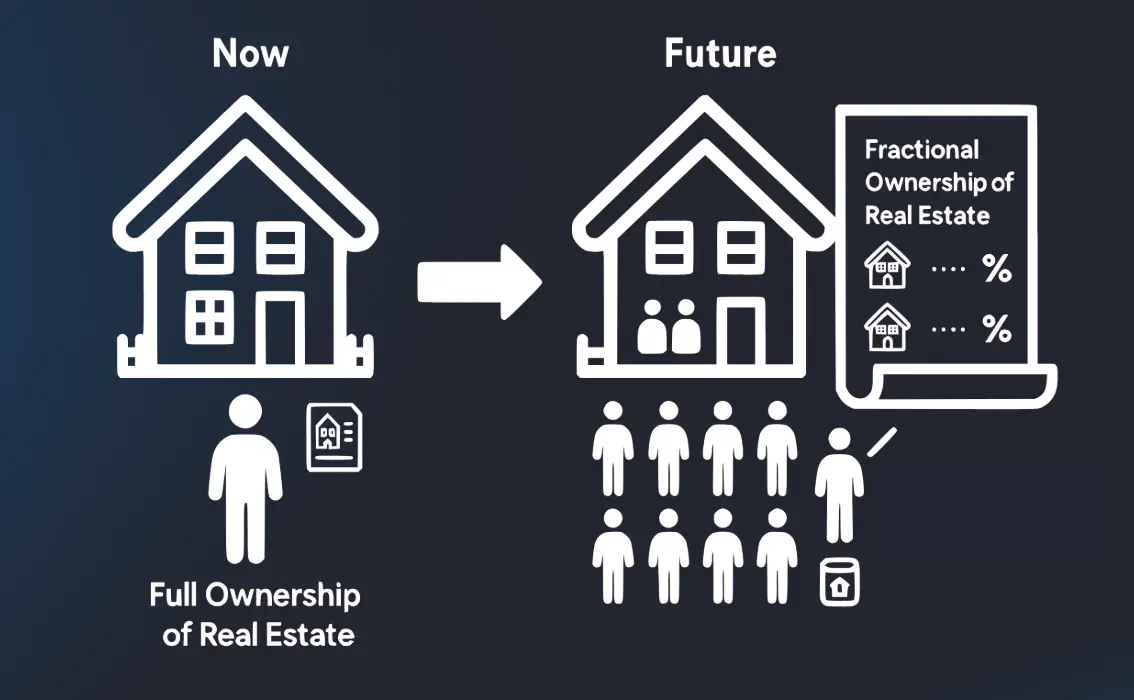
Figure 1: Evolution from Traditional Full Ownership to Tokenized Fractional Ownership
How Traditional Property Investment Works
In the conventional real estate investment model, illustrated on the left side of the diagram as "Now," the process is straightforward but capital-intensive:
Single Owner, Full Investment: An individual or entity purchases an entire property, holding complete ownership rights. This requires significant upfront capital—often hundreds of thousands or millions of dollars depending on the market and property type.
Complete Control, Complete Risk: The single owner bears all financial responsibility, including the down payment, mortgage payments, property taxes, maintenance costs, and insurance. While this provides complete control over the property, it also concentrates all risk in one party.
Illiquid Asset: Real estate is notoriously illiquid. Selling a property typically takes months, involves substantial transaction costs (agent commissions, legal fees, closing costs), and depends on finding a qualified buyer willing to purchase the entire asset.
High Barriers to Entry: The capital requirements effectively exclude most retail investors from prime commercial real estate, luxury residential properties, and diversified real estate portfolios. Real estate investment has traditionally been the domain of wealthy individuals and institutional investors.
Limited Diversification: With capital tied up in one or a few properties, investors face concentration risk. Geographic, market, or property-specific issues can significantly impact their entire investment.
Challenges of Traditional Property Investment
The traditional model, while proven over centuries, presents several significant challenges:
•Capital Intensity: Requiring hundreds of thousands of dollars limits participation to a small percentage of potential investors
•Illiquidity: Properties can take 3-6 months or longer to sell, with no guarantee of achieving the desired price
•High Transaction Costs: Buying and selling involves 5-10% of the property value in fees and costs
•Geographic Limitations: Investors typically focus on local markets where they have knowledge and can manage properties
•Management Burden: Property ownership involves ongoing responsibilities for maintenance, tenant management, and compliance
•Lack of Transparency: Property values, rental income, and market conditions can be opaque and difficult to verify
The Future: Tokenized Fractional Ownership
The right side of the diagram illustrates "Future"—a fundamentally different model enabled by blockchain tokenization.
How Tokenized Property Investment Works
Tokenization transforms real estate investment by dividing property ownership into digital tokens that can be bought, sold, and traded on blockchain platforms:
Multiple Owners, Fractional Investment: Instead of one owner purchasing an entire property, the ownership is divided into thousands or even millions of tokens. Each token represents a fractional ownership stake in the property. As shown in the diagram, multiple investors can now participate in owning the same property.
Lower Capital Requirements: Investors can purchase as few or as many tokens as they wish, potentially starting with investments as small as $100-$1,000 instead of hundreds of thousands. This democratizes access to premium real estate assets.
Digital Ownership Certificates: Each token is recorded on a blockchain, providing an immutable, transparent record of ownership. The diagram shows a digital document displaying "Fractional Ownership of Real Estate" with percentage allocations—this represents the tokenized ownership structure.
Liquid Secondary Markets: Tokens can be traded on specialized platforms, providing liquidity that traditional real estate lacks. Investors can sell their fractional ownership stakes in days or even minutes, rather than months.
Global Accessibility: Through web and mobile platforms, investors worldwide can access tokenized real estate opportunities, breaking down geographic barriers.
Automated Management: Smart contracts can automate rental income distribution, dividend payments, and governance rights, reducing administrative overhead and increasing transparency.
The Tokenization Process for Real Estate
The transformation from traditional to tokenized ownership involves several key steps:
1.Property Acquisition and Legal Structuring: A property is acquired and placed into a Special Purpose Vehicle (SPV) or legal trust structure.
2.Valuation and Due Diligence: Professional appraisers determine the property's value, and legal experts ensure clear title and regulatory compliance.
3.Token Creation: The property ownership is divided into a specific number of tokens, each representing a fractional ownership stake. For example, a $10 million property might be divided into 10 million tokens at $1 each.
4.Blockchain Recording: Tokens are minted on a blockchain platform (such as Ethereum, Polygon, or specialized real estate blockchains), creating an immutable ownership record.
5.Platform Distribution: Tokens are listed on investment platforms where investors can browse opportunities, conduct due diligence, and purchase fractional ownership stakes.
6.Ongoing Management: The platform manages property operations, distributes rental income proportionally to token holders, and provides transparent reporting on property performance.
Comparing Traditional vs. Tokenized Real Estate Investment

Transformative Benefits of Tokenized Real Estate
The shift from traditional to tokenized property investment delivers numerous compelling benefits:
1. Democratized Access to Premium Assets
Tokenization breaks down the capital barriers that have historically excluded retail investors from high-value real estate. A middle-class investor can now own fractional stakes in luxury apartments, commercial office buildings, or industrial warehouses that would have been completely inaccessible under the traditional model.
According to Deloitte, the tokenized real estate market is projected to reach $4 trillion by 2035 [1], driven largely by this democratization of access. Properties that once required millions in capital can now be accessed with investments as small as a few hundred dollars.
2. Enhanced Liquidity
Real estate has always been one of the least liquid asset classes. Tokenization fundamentally changes this by creating secondary markets where fractional ownership stakes can be traded rapidly. Instead of waiting months to sell a property and incur substantial transaction costs, token holders can exit positions in days or even minutes.
This liquidity transformation has several implications:
•Reduced Liquidity Premium: Investors may accept lower returns knowing they can exit positions quickly
•Price Discovery: Active trading provides more accurate, real-time property valuations
•Risk Management: Investors can rebalance portfolios quickly in response to market conditions
3. Portfolio Diversification
With lower minimum investments, investors can spread capital across multiple properties, geographies, and property types. Instead of concentrating wealth in one local property, an investor with $100,000 could potentially own fractional stakes in:
•A commercial office building in New York
•A residential apartment complex in Berlin
•An industrial warehouse in Singapore
•A retail center in Dubai
This diversification reduces risk and provides exposure to different market dynamics, economic cycles, and growth opportunities.
4. Transparency and Security
Blockchain technology provides unprecedented transparency in real estate investment:
•Immutable Ownership Records: Blockchain creates a permanent, tamper-proof record of who owns what
•Real-Time Reporting: Platforms can provide instant access to property performance data, rental income, occupancy rates, and valuations
•Reduced Fraud: Smart contracts and blockchain verification make it extremely difficult to falsify ownership or manipulate records
•Automated Compliance: Smart contracts can enforce regulatory requirements automatically
5. Lower Transaction Costs
Traditional real estate transactions involve numerous intermediaries—agents, lawyers, title companies, escrow services—each taking fees. Tokenization streamlines this process:
•Reduced Intermediaries: Blockchain and smart contracts automate many functions previously requiring human intermediaries
•Lower Fees: Platform fees typically range from 0.5-2% compared to 5-10% in traditional transactions
•Faster Settlements: Blockchain enables near-instant settlement compared to weeks in traditional transactions
6. Global Market Access
Tokenization creates a borderless real estate market. An investor in Tokyo can own fractional stakes in London properties, while a European investor can access emerging market opportunities in Southeast Asia. This global accessibility:
•Increases Capital Flow: Properties can attract investment from worldwide sources
•Enhances Competition: Global access creates more competitive pricing
•Provides Geographic Diversification: Investors can hedge against local market downturns
7. Fractional Income Streams
Token holders receive proportional rental income and appreciation, just like traditional owners, but with far greater flexibility:
•Automated Distributions: Smart contracts can distribute rental income automatically to token holders
•Proportional Rights: Each token holder receives income proportional to their ownership stake
•Reinvestment Options: Investors can easily reinvest income into additional tokens or different properties
8. Programmable Assets
Smart contracts enable sophisticated investment structures that would be impractical in traditional real estate:
•Automated Governance: Token holders can vote on property decisions proportional to their holdings
•Conditional Transfers: Tokens can be programmed with transfer restrictions for regulatory compliance
•Dividend Reinvestment: Automatic reinvestment of rental income into additional tokens
•Exit Strategies: Pre-programmed buyback mechanisms or redemption rights
Real-World Applications and Market Growth
The tokenized real estate market is already gaining significant traction:
Major Institutional Adoption: Financial giants including BlackRock, JPMorgan, and Franklin Templeton are actively exploring and launching tokenized real estate products. In 2024, BlackRock tokenized a money market fund on blockchain, signaling institutional confidence in the technology.
Successful Tokenization Projects:
•St. Regis Aspen Resort: A luxury hotel in Colorado was partially tokenized, allowing investors to purchase fractional ownership stakes
•Manhattan Real Estate: Multiple New York properties have been tokenized, providing fractional ownership opportunities
•European Properties: Several European cities have seen successful tokenization of commercial and residential properties
Market Projections: According to McKinsey, the broader tokenized asset market could reach $2 trillion by 2030 [2], with real estate representing a substantial portion of this growth.
Challenges and Considerations
Despite its promise, tokenized real estate investment faces several challenges:
Regulatory Uncertainty
Different jurisdictions have varying regulations regarding digital securities. Tokenized real estate must typically comply with securities laws, requiring:
•Registration or Exemptions: Tokens may need to be registered as securities or qualify for exemptions
•Investor Accreditation: Some jurisdictions limit participation to accredited investors
•Cross-Border Compliance: Global investments require navigating multiple regulatory frameworks
Technology Risks
Blockchain and smart contract technology, while robust, carries risks:
•Smart Contract Bugs: Coding errors could result in loss of funds or incorrect distributions
•Platform Security: Investment platforms must protect against hacking and unauthorized access
•Blockchain Reliability: Network congestion or technical issues could impact trading and settlements
Market Maturity
The tokenized real estate market is still emerging:
•Limited Track Record: Fewer historical examples compared to traditional real estate
•Liquidity Constraints: Secondary markets are still developing and may lack depth
•Valuation Challenges: Determining fair value for fractional stakes can be complex
Legal Framework Evolution
The legal treatment of tokenized real estate continues to evolve:
•Ownership Rights: Legal enforceability of token-based ownership claims varies by jurisdiction
•Dispute Resolution: Mechanisms for resolving conflicts among fractional owners are still developing
•Bankruptcy Protection: Treatment of tokenized assets in bankruptcy scenarios remains unclear in some jurisdictions
The Path Forward: Hybrid Models and Integration
The future likely involves integration rather than complete replacement. We may see:
Hybrid Ownership Structures: Combining traditional full ownership for some investors with tokenized fractional ownership for others, providing flexibility and capital efficiency.
Institutional Tokenization: Large real estate portfolios held by REITs and institutional investors being tokenized to improve liquidity and reduce costs.
Regulatory Maturation: As regulations evolve and standardize, tokenized real estate will become more mainstream and accessible.
Technology Integration: Traditional real estate platforms integrating blockchain technology to offer both conventional and tokenized investment options.
Conclusion: A Paradigm Shift in Property Investment
The evolution from traditional full ownership to tokenized fractional ownership represents more than a technological innovation—it's a fundamental reimagining of how we invest in real estate. As illustrated in the comparison diagram, the shift from a single owner holding full ownership to multiple investors holding fractional stakes democratizes access, enhances liquidity, reduces costs, and creates unprecedented flexibility.
Traditional property investment will continue to exist, particularly for those seeking complete control or preferring established legal frameworks. However, tokenization opens real estate investment to millions of people previously excluded by capital requirements, creating a more inclusive and efficient market.
For investors, the benefits are compelling: lower barriers to entry, enhanced liquidity, portfolio diversification, transparency, and reduced costs. For property owners, tokenization provides new capital sources, faster transactions, and global market access.
As regulatory frameworks mature, technology improves, and market adoption grows, tokenized real estate investment will increasingly become the standard rather than the exception. The future of property investment is fractional, digital, and accessible—transforming real estate from an exclusive asset class into an opportunity available to all.